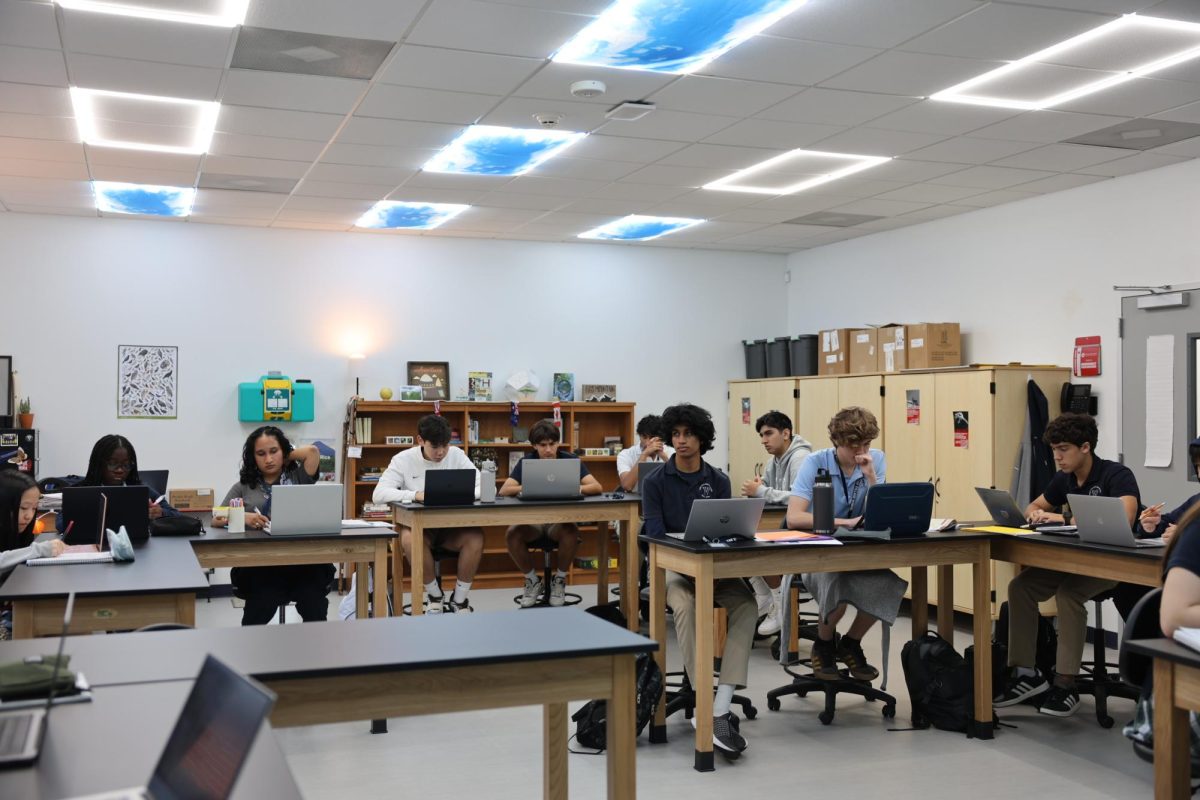

Executive functioning can raise the hairs on a student’s neck, and for neurodivergent students especially, it can be as terrifying as a monster.
Executive functioning is the psychological concept of one’s mental capacity to facilitate the skills and actions needed to complete tasks and reach goals. Neurodivergent people, specifically those who have ADHD, dyslexia, dyscalculia, or other similar learning disabilities, typically have a more difficult time developing strong executive functioning. For neurodivergent freshmen and sophomores in particular, the transition to high school can be difficult to adjust to. That’s why with the help of Learning Specialist David Farfan, The Village High School freshmen and sophomores with accommodations are participating in a yearlong one-on-one crash course on executive functioning to help them build the skills necessary for success.
“Freshmen have been receptive to these lessons so far. Some of them are using the to-do lists and learning how to take lecture notes,” Farfan said. “It really depends on the student.”
According to Farfan, the course is split up into different themes based on the month and semester. The first semester is all about building the foundations of effective time management, emotional regulation, and organization. However, once November wraps up, students will be expected to start utilizing their lessons from previous months and begin crafting their own Specific, Measurable, Achievable, Relevant, and Time-bound (SMART) goals to work towards by the end of the school year.
Farfan acknowledges that these executive functioning lessons may look different for every student he works with. “It depends on the diagnosis. Some of them need more help for structuring their time, some of the others need more help with structure for notetaking, others may need more handholding in general,” he said.
Farfan has developed resources ranging from printed daily planners to task checklists to distribute as supplements for students. Yet, even through these resources, another key factor must be considered in how effective these strategies will become: emotional regulation. Social-emotional counselor Rayla Willis, emphasizes the importance of mental health wellness for neurodivergent students, learning how to cope with their unique differences in executive functioning.
“Oftentimes, students who suffer from executive functioning deficiencies have an increased level of anxiety and stress due to the lack of skillset,” Willis said.
Willis commented that of all the recent cases of neurodivergent students referred to her for help in the classroom, a recurring theme behind lack of organization and abundance of procrastination is fear. Neurodivergent students, including those undiagnosed, carry extra burdens: on top of already struggling to keep up with all of their tasks and assignments, family pressures and comparing oneself to peers induce fear and low self-esteem that will exacerbate the already-difficult challenge of initiating or finishing a task. Some families who misunderstand the extent of their neurodivergent child’s executive functioning difficulties may resort to ineffective solutions that do not address the root of the issue.
“Sometimes, families have the mindset of, ‘If I put you with this person, with this tutor, with this course, then it should pan out,’” Willis said.
At a diverse school like The Village School, as neurodivergent freshmen and sophomores undertake these executive functioning lessons, families and peers must be supportive and accommodating so that neurodivergent students can feel confident in their own abilities and mindsets.
“I acknowledge those differences in culture, and I speak from a professional space and say, ‘these are the challenges I’ve identified, and these are the possibilities,’” Willis said.